Why Your Home is the Best Investment of All

Key advantages of homeownership include:

  • Real Estate Historically Appreciates. On average, home values rise at the rate of 5% per year over the long term, often outpacing inflation. This means your asset becomes more valuable while the cost of your fixed-rate mortgage payment stays the same.
  • You Build Equity Automatically. Each mortgage payment further builds wealth by increasing your property ownership stake. This property equity growth becomes a powerful financial asset you can tap through selling, refinancing, or borrowing.
  • Homes Protect Against Inflation. As inflation rises, so do rents—but a fixed-rate home mortgage does not increase. Meanwhile, your home value increases at the 5% average annual rate increasing your asset’s worth in real terms.
  • Mortgage Interest Deduction Homeowners who itemize can deduct the interest paid on their mortgage  up to $750,000 of qualified mortgage debt ($375,000 for married individuals filing separately).
  • Property Tax Deduction You can deduct state and local property taxes paid on your home. This deduction, along with other state and local taxes (SALT), is capped at a total of $10,000 per year ($5,000 if married filing separately) through 2025.

Why Your Home Is the Best Investment of All

Key advantages of homeownership include:

  • Mortgage Points “Points” (loan origination fees or discount points paid to lower your interest rate) paid at closing may be fully deductible in the year you pay them if certain IRS requirements are met, particularly for a primary residence.
  • Home Office Deduction If you are self-employed and use a portion of your home exclusively and regularly for business purposes, you may be able to deduct a portion of your mortgage interest, utilities, and other related expenses.
  • Home Equity Interest Deduction Interest on a home equity loan or line of credit (HELOC) is deductible, but only if the funds are used to “buy, build, or substantially improve” the home securing the loan. Using the funds for personal expenses like vacations does not qualify. 
  • Capital Gains Exclusion When you sell your primary residence, you may be able to exclude a significant amount of the profit (capital gain) from your taxable income.  You can exclude up to $250,000 in gain if you are a single filer and up to $500,000 if you are married and file jointly.  To qualify, you must have owned and lived in the home as your main residence for at least two out of the five years leading up to the sale.

Financial Planning, Preparation, Saving and Budgeting

  • The Mortgage and Down Payment.  The two major categories of the money used to buy a home are the lender’s mortgage and the buyer’s down payment. The total amount in each of these categories is determined by the amount of income and savings the buyer can afford to apply to purchasing their home.  So, preparing to buy a home requires a period of financial planning  for budgeting and saving to be prepared for each of the financial phases of the home purchase.  At closing the discipline of saving for a down payment is exchanged for the commitment to make monthly mortgage payments that begin when the purchase is formalized at closing.  While down payments normally range from 0 to 20 percent for first-time home buyers depending on the type of loan they are qualified to use, the greater the value of the down payment, the more favorably the home buyer’s offer to purchase is regarded by the seller when comparing competing buyer offers.  When a home is fully paid in cash (a 100% downpayment), no lender’s mortgage is required.  But in all other cases, where some of the purchase price is provided by a lender, the lender plays an important role in the financial decision-making including interest rates, inspections, appraisal and the time it takes to close.

Financial Planning, Preparation, Saving and Budgeting

  • Calculating Affordability.   The mortgage lender measures the strength of a prospective buyer’s financial capability to continue making mortgage payments while owning a home by reviewing  a number of numeric qualifiers that the buyer has established through their history of income, savings, payment reliability, etc.  Statistically lenders know that 43% of earned income is the upper limit of a buyer’s income that can be allocated to their debts, including the monthly mortgage payments without over-burdening the funds they need to live a normal and comfortable lifestyle. The 43%, called the debt-to-income (DTI) ratio, is the quotient resulting from dividing the monthly mortgage payments by the total monthly income. It is a number you should calculate yourself to begin to gain an understanding of the price of the home you can afford.  So, for example, if your DTI is $3,000 per month, then the total monthly mortgage payment you can afford (including the loan’s Principal, Taxes and Insurance (PTI)) cannot be higher than $3,000. And mathematically it is clear that a monthly income of $6,977.00 is required to allocate 43% to PTI ($3,000/.43=$6,977) or $83,724 per year. At this time a $3,000 mortgage payment is enough to buy a home between $450,000 and $500,000 in value.

Financial Planning, Preparation, Saving and Budgeting

  • Don’t Forget to Save for Closing Costs: In addition to the down payment, you will need to pay closing costs, which typically range from 2% to 6% of the loan amount. Start saving for the down payment, which is typically between 5-20% of the home’s price and set aside separate funds for closing costs, which can include appraisal, inspection, and attorney fees, etc.
  • Funding Your Lifestyle. Additionally, the remainder of each month’s income, $3,977 ($6,977-$3,000=$3,977) is the amount of money you will have available to budget all of the other lifestyle costs for carrying on normal living activities. In this example, before you approach a lender about your future mortgage, you should be saving for the down payment you need/intend to make on your home at the $3,000 rate per month and you should be living comfortably on a budget of $3,977 per month –  the remaining 57% of your monthly income.

Understanding and Improving Your Credit Rating

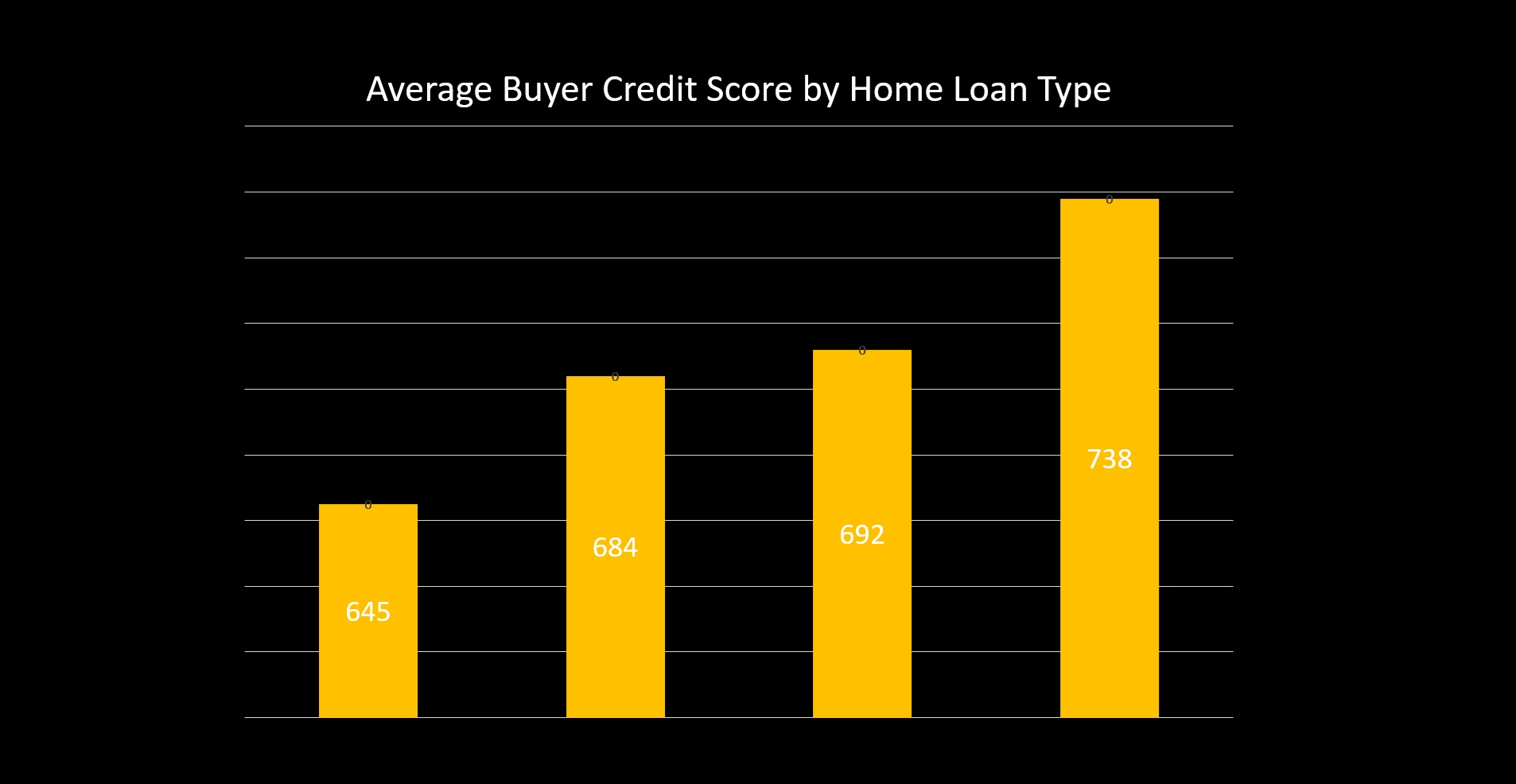
Once a home is purchased, the monthly payments continue to be due every month for 30 years.  Lenders evaluate their borrowers’ financial dependability by reviewing the credit scores of the three major credit rating companies, Equifax, Experian and Transunion.  Each company will have an independent rating number for your financial activity on a scale that ranges from 0 to 850.  Generally, the following ranges and their categorization are the following:

    • 300 – 579  – Poor
    • 580 – 669 – Fair
    • 670 – 739 – Good
    • 740 – 799 – Very Good

Understanding and Improving Your Credit Rating

Scores in the lower ranges of the credit scale do not prevent borrowers from buying homes.  Lenders make adjustments to the cost and amount of the loans they make where lower scores are found. The cost of a mortgage loan is the rate of interest the lenders charge.  So, higher interest rates are more expensive mortgages. But more importantly, the scores are based on payment history records that may need to be corrected. You need to get your credit records from all three companies and review the specific discrepancies they are showing for accuracy.  It is not uncommon for the discrepancies to be incorrect or outdated.  You can have errors corrected or removed.  Additional improvement in the scores can be achieved by being careful to make all future payments in full and on time. Review your credit report and address any errors or issues to ensure a better interest rate. If your score is low, take steps to improve it before applying for a loan.

Hire a Real Estate Professional

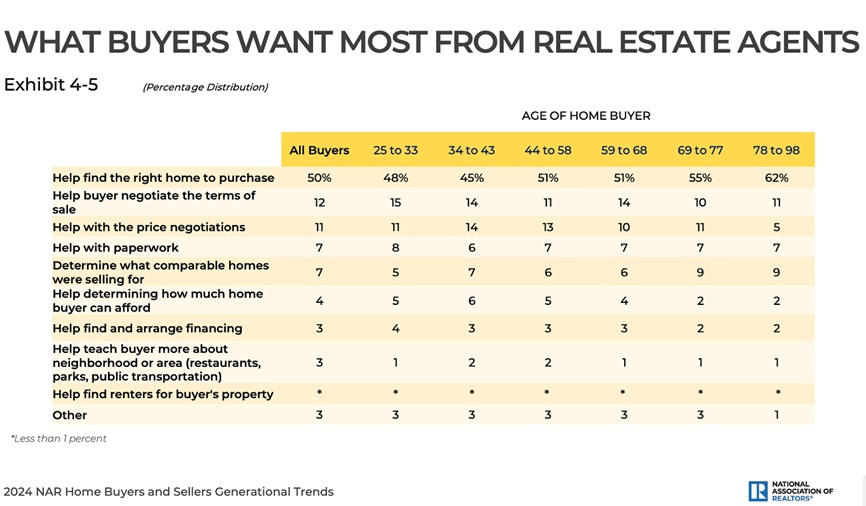
Your real estate professional is a consultant, marketer, negotiator, project manager, advisor, loyal confidant and much more. The best profiles include a seasoned professional with degrees and certifications in consulting, marketing, negotiations, project management, photography and regulatory compliance. Review their website and brochures for:

    • Prior home sales websites
    • A Professional record of sales
    • Client informational resources and references
    • Ongoing mail, email and social media marketing campaigns
    • Top notch professional marketing collateral, including sales and listing brochures, sales
    • Professional degrees, certifications and
    • A record of real estate industry professional involvement

Choose a Lender

Interview several lenders to compare their rates and terms. When you select a lender, they will require copies of the documents listed pre-approval letter gives you a firm handle on your budget and shows sellers you are a serious buyer. When you find the home that you would like to buy, your lender will write a preapproval letter stating the amount of the loan they are willing to fund and the amount of the downpayment you will make to cover the full offer price you are planning to make for your preferred home.  The home seller will need to see both the purchase offer that your agent will write and the lender’s preapproval letter.  The Seller will ask for some form of financial verification that you have sufficient cash funds available to pay the downpayment.  That proof of funds can be a letter from the bank where the money is deposited, or a screen print of the account containing the money that includes your name and the bank’s name with the account number redacted. 


Lenders typically require two years of W-2s and tax returns, two to three recent pay stubs (covering the last 30 days), and two months of bank statements for a standard mortgage application.. These financial records will be used to validate the amount of your  financial capability compared to the amount of money your home purchase will require and the ensuing monthly mortgage payments.

Search for Homes

Share Your Needs, Wants and Geographical Target Area with Your Real Estate Professional. Create a list of “needs” (deal-breakers) and “wants” (preferences), including geographical boundaries that are compatible with the commute you will need to make each day, to clarify your preferred focus areas. Tour homes and research neighborhoods that fit your criteria and budget.

Make an Offer

Make an offer and negotiate an Agreement on Terms. When your home is selected, your agent will assist you determine its fair market value and to express your offer in the form of a real estate contract that the seller can sign when he accepts it. Negotiation frequently involves at least a few offers and counter offers to set terms suitable to both parties.  Traditionally, buyers have paid a good faith deposit to secure their offer which is held by the seller’s attorney.  The remainder of the down payment is remitted in full within 10 days after the completion of the home inspection.

Perform Inspections

Conduct both home and septic inspections where appropriate. Hire professional inspectors to check the property for full functionality of all systems, sound and reliable structural components, defective appliances and building furnishings, health, safety and environmental systems and conditions. The inspection reports are the basis for upgrades, repairs or compensatory remedies which are negotiated by either the agents or the attorneys.


The formal loan application. A mortgage application is accompanied by an accepted offer to document the results of the contract negotiations. The lender’s underwriter collects and verifies all of the required financial documentation they ask you to collect: (pay stubs, W-2s, bank statements, etc.)

Have the Home Appraised

  • Bank appraisal. About 2-3 weeks before closing your lender schedules an appraisal to determine the property’s fair market value which ensures that the home is worth the amount of money they will need loan.

Final Walk Through and Closing

The final walk-through. On the day of closing, a final home walkthrough inspection is conducted to verify that the home is clean, remains in the expected condition and that all repairs have been acceptably completed.


Close the sale. At the closing meeting, you will sign numerous legal documents, pay your remaining down payment and closing costs, and the title of the home will be transferred to you. Once all the paperwork is signed and funded, you get the keys! 

Certifiable Qualifications and Expertise that Ensure a Smooth and Profitable Transaction


You will enjoy many benefits and advantages by choosing to work with James Bean and his Associates that will ensure a smooth and successful outcome from the purchase or sale of your home.  James has a long and storied business background with numerous credentials and achievements that support and inform the excellent performance he enjoys in real estate.  While many previous professional degrees and certifications have been omitted from the following list, those that remain are significant and valuable advantages to you in buying or selling your home.

The following credentials make direct and significant contributions to the excellence of the day-to-day success of the associates’ real estate business management.  With respect to the advantages documented on the page above, the certifications in pricing, negotiations, project management, luxury home marketing, professional photography, and aerial photography provide all of our clients with verifiably superior marketing products and presence; smother, timelier and more profitable transaction outcomes; and a well-developed and reliable brand presence to support clients with an advantageous platform when they enter the local, regional and international market places.

  • MBA, Business Administration, Villanova University (DATA TABLE)

  • MPM, Project Management, George Washington University 
  • Certified Project Management Professional
  • NCJAR and HGAR Professional Standards Committees
  • Certified Real Estate Negotiator (CREN)
  • Certified Pricing Strategy Advisor (PSA)
  • Certified International Property Specialist (CIPS) and world traveler
  • Certified Luxury Home Marketing Specialist (CLHMS)
  • Certified Professional Photographer (CPP) and business owner
  • Licensed Federal Aviation Administration Aerial Drone Pilot

We look forward to inviting you aboard our successful and growing real estate enterprise.  We have many happy clients, well-developed systems, brand recognition, operational marketing channels, orientational literature you can request and highly-qualified and experienced professionals ready to provide you with the success you are looking for.  We look forward to working with you!!!

James Bean Professional Portrait and Coldwell Banker Global Luxury Logo.

James Bean

Listing Broker

(973) 987-7065

beanjc@gmail.com

I would like:


Stay In Touch!


M - (973) 987-7065

James Bean

beanjc@gmail.com

 Primary Office:  Coldwell Banker Realty       24 White Deer Pl, Sparta, NJ 07871       Office: (973) 222-6521

© 2026 Copyright 2026 by James Bean